

State Forensic Medicine Service opened its doors to Japanese forensic experts
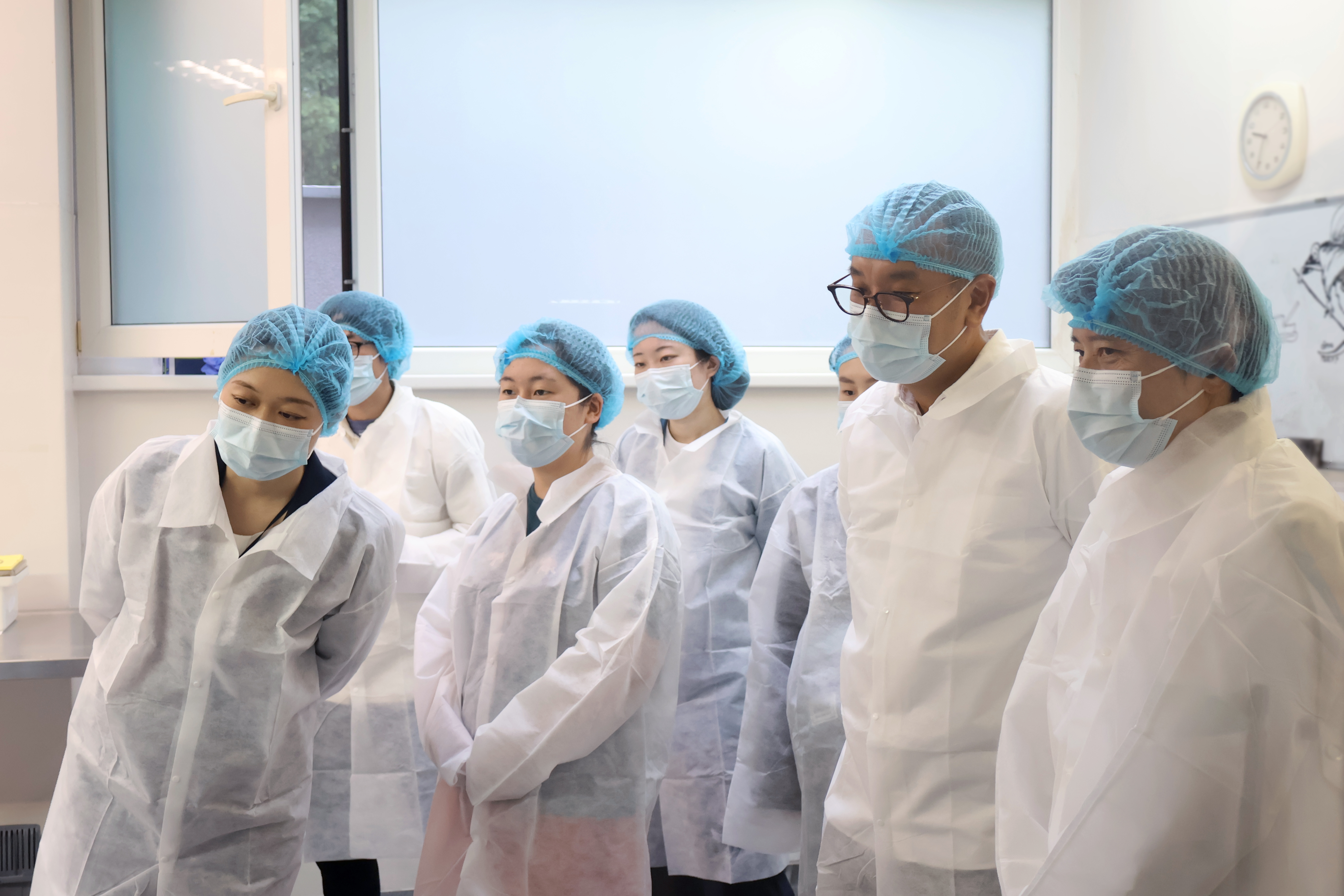
From July 26 to August 1, a delegation of nine guests from Japan visited the State Forensic Medicine Service (VTMT). The purpose of the visit was academic exchange and a conference aimed at sharing current developments in forensic medicine and strengthening international cooperation. The Japanese experts represented the International University of Health and Welfare (IUHW) in Ōtawara, Tochigi Prefecture, and Chiba University in Chiba Prefecture.
Introduction to VTMT laboratories and expert activities
The official reception took place on July 28, during which the guests were presented with the activities of the Service and the expert services it provides. The delegation became acquainted with the main VTMT laboratories—Serology and DNA, Toxicology, Forensic Medicine, and Histology—the equipment they use, the research conducted, and their expert capabilities.
International Conference: Knowledge, Experiences, and Shared Insights
The highlight of the visit was the international conference held on July 29 – “Current Issues in Forensic Medicine Practice.” Around one hundred participants attended, both in person and remotely. The guests, together with conference attendees and speakers from Lithuania, took part in joint discussions and shared experiences in both scientific and practical aspects of forensic medicine. At the end of the event, all participants who presented reports were awarded certificates.
Members of the Japanese delegation delivered presentations on the specifics of forensic medicine in their country. Forensic expert Prof. Daisuke Yajima from IUHW introduced the structure of forensic medicine in Japan and related scientific research, while Assoc. Prof. Ayumi Motomura gave a detailed presentation on disaster victim identification (DVI) activities in Japan. Junior medical students, residents, and technologists shared their experiences, discussed the peculiarities of autopsy statistics in Japan, and presented toxicological research methods as well as the forensic medicine training system.
The Lithuanian representatives were equally active—the experts and residents of the State Forensic Medicine Service (VTMT) presented eight reports at the conference, covering current issues in forensic toxicology, forensic medicine, anthropological research, sudden death investigations, and cases of sexual violence.
Practical Observations of Expert Activities
During the delegation’s visit, practical observations were also organized, including autopsies and patient examinations, as well as a visit to the Kaunas branch. The guests became familiar with forensic medicine, osteology, age estimation of living individuals, and biochemical and biological (plankton) analyses conducted there. These activities provided Japanese specialists with the opportunity to gain empirical knowledge and insights, develop a deeper understanding of Lithuanian forensic medicine methodologies, and at the same time share practices applied in Japan.
Cultural Program and Introduction to Lithuanian Cities
In addition to professional activities, the guests were given the opportunity to explore Lithuanian culture and landscapes. During their stay, they also visited notable cultural, historical, and natural sites in Vilnius Old Town, Alytus, Trakai, and Druskininkai.
Development of Professional Dialogue Between Experts from Both Countries
The visit of the Japanese delegation was an important step in international partnership, promoting further scientific exchanges and the development of professional competencies between the forensic medicine communities of Lithuania and Japan.
Ministry of Health Communication Division and the State Forensic Medicine Service (VTMT) (VTMT photo)