

A historic declaration by the Baltic states on strengthening the resilience of the regional healthcare system has been signed
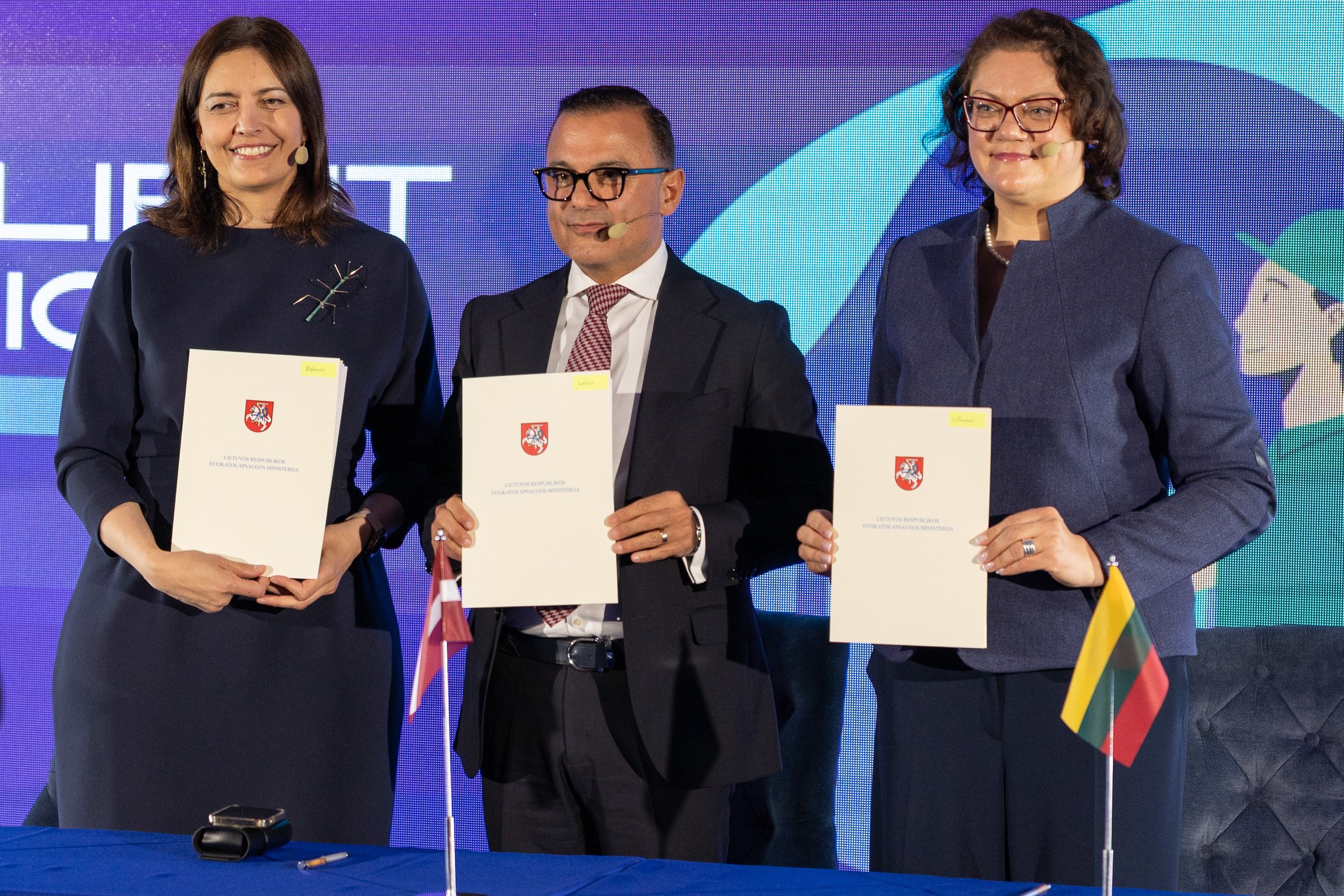
At the first international strategic conference, "Resilient Medicine 2026", which opened today in Vilnius, a major step was taken toward strengthening the resilience of the region’s healthcare system to crises. Lithuania’s Minister of Health, Marija Jakubauskienė, Latvia’s Minister of Health, Hosams Abu Meri, and Estonia’s Minister of Social Affairs, Karmen Joller, signed a historic joint declaration reaffirming their commitment to deepening regional cooperation to ensure effective action during large-scale crises and armed conflicts.
According to Minister of Health M. Jakubauskienė, the signed declaration symbolizes the unity and determination of the three neighboring countries to integrate civilian healthcare into the broader defense architecture. “Preparedness for crises is not a finite project — it is a continuous process that requires constant adaptation to changing realities. As we stand on the front line of the European Union and NATO’s defense, we must clearly understand that civilian healthcare is a pillar of national security and an integral part of support for the armed forces,” she emphasized.
The signed declaration states that the Baltic states form the eastern border of the European Union and the first line of defense against hybrid and geopolitical threats.It emphasizes that, in the event of a crisis, the majority of the injured would be treated in civilian healthcare institutions, making it essential to ensure the continuity of their operations under extreme conditions and to increase their capacity to handle mass patient influxes.
Through the document, the countries commit to cooperation in three main areas: joint planning of civilian healthcare systems, development of regional medical training programs, and strengthening a coordinated approach to medical stockpiles and reserves. Particular attention will be given to secure information exchange regarding healthcare capacities, cybersecurity, and resilience to disinformation in order to prevent disruptions during crisis management.
The signed declaration provides for closer cooperation in identifying opportunities for joint public procurement, optimizing resources, and strengthening the resilience of regional supply chains for pharmaceutical products, blood components, and critical medical equipment. The document signed by the Baltic health ministers represents a significant step toward a shared goal of becoming a leading European Union region in the practical integration of civilian and military sectors, ensuring a seamless chain of assistance.
On May 5–6, Vilnius is hosting the international conference "Resilient Medicine 2026" for the first time in the history of the Baltic states. Healthcare, defense, and civil protection leaders and experts from Lithuania, Latvia, Estonia, Ukraine, Israel, and international organizations are sharing their experience at the event. The conference aims to overcome institutional boundaries between civilian medicine, military medical services, and crisis management structures, and to create a unified national architecture enabling the healthcare system to function under high-intensity threat conditions.
Photo by Rūta Chairutdinovaitė